
In this story
The key is not pressure alone, but hotter water
At sea level, ordinary water boils at about 100°C. Once it reaches that temperature, additional heat mainly changes liquid water into steam rather than making the boiling water substantially hotter. This places a practical limit on the temperature of many conventional moist-cooking methods.
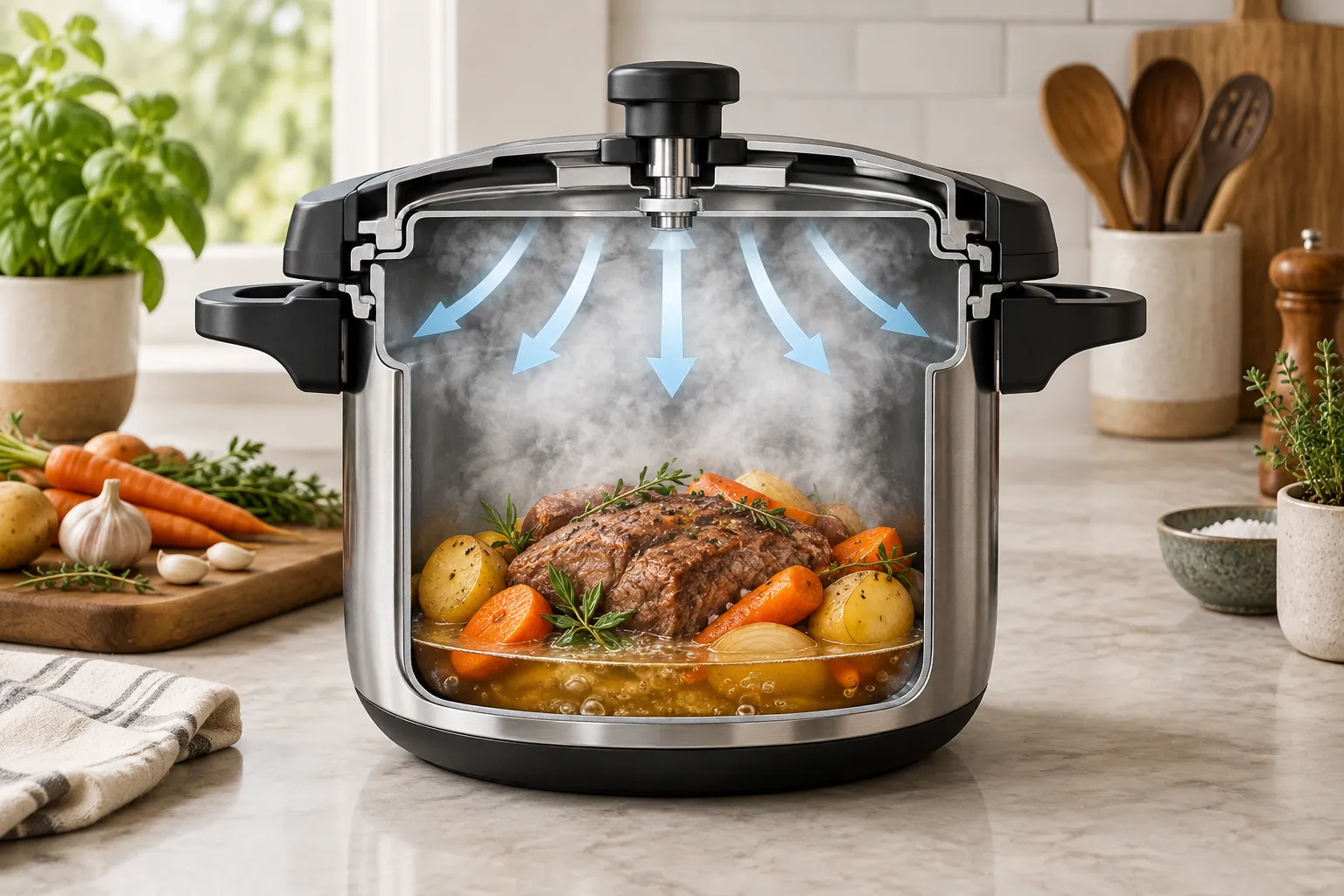
A pressure cooker changes that limit. Its lid seals the pot, so steam cannot freely escape. The trapped steam increases the pressure above the liquid. Water must then become hotter before its vapour pressure is strong enough to match the pressure surrounding it and form sustained bubbles throughout the liquid.
At a commonly used pressure of about 15 pounds per square inch above atmospheric pressure, the cooking temperature can reach roughly 120–121°C, or about 250°F. The exact temperature depends on the cooker’s pressure setting and operating conditions, so the figure is an approximation rather than a universal value.
What happens inside the pot
The process begins with liquid in the inner pot. As the cooker heats, some of that liquid becomes steam. In an electric model, a heating element supplies the energy; in a stovetop model, the hob does the work.
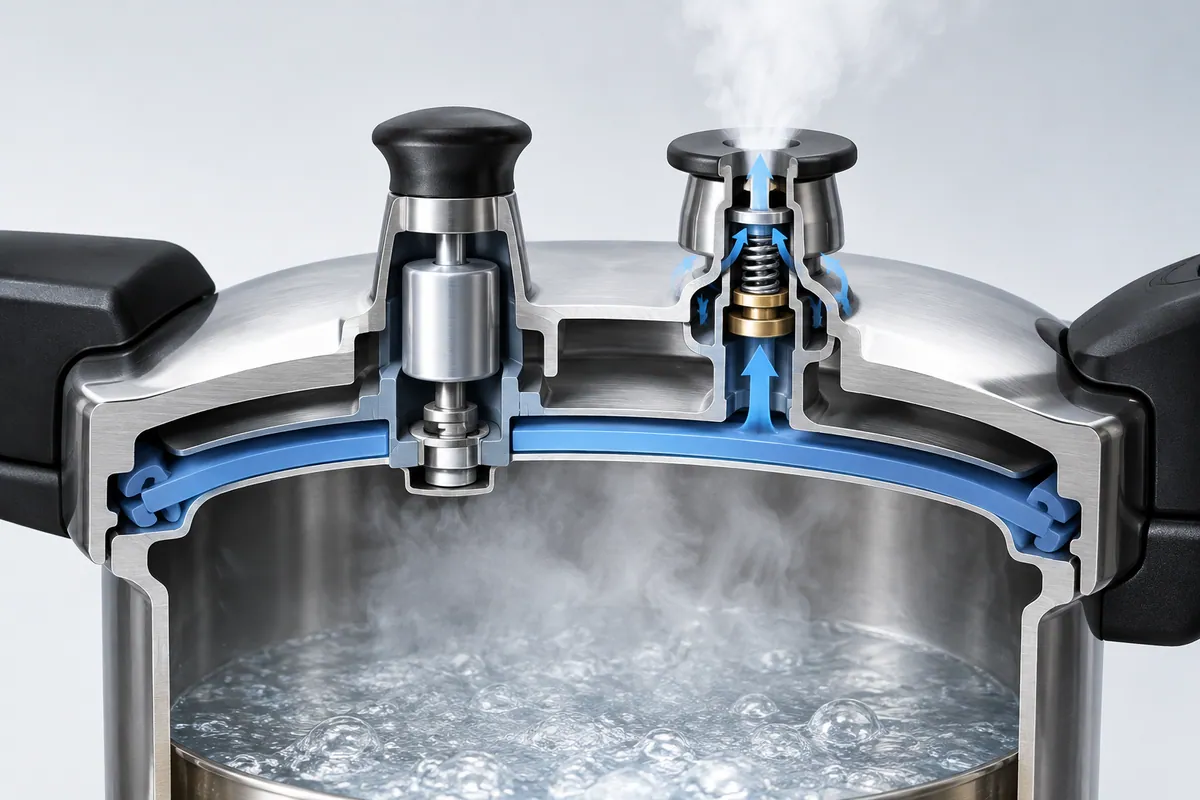
The lid’s sealing ring prevents most steam from escaping. As more steam is produced, the pressure rises. A valve then regulates the pressure by allowing small amounts of steam to escape when the selected limit is reached. In many electric cookers, a float valve rises to indicate that the pot is pressurised and helps keep the lid locked.
Once the cooker reaches operating pressure, the food is being exposed to a combination of higher temperature, steam and liquid. Heat moves into the food from the hot liquid, from the steam touching its surface, and from the hot metal of the cooking vessel. The higher temperature is the main reason cooking accelerates; the moisture is especially important for foods that need hydration or tenderising.
Why beans and tough meat benefit so much
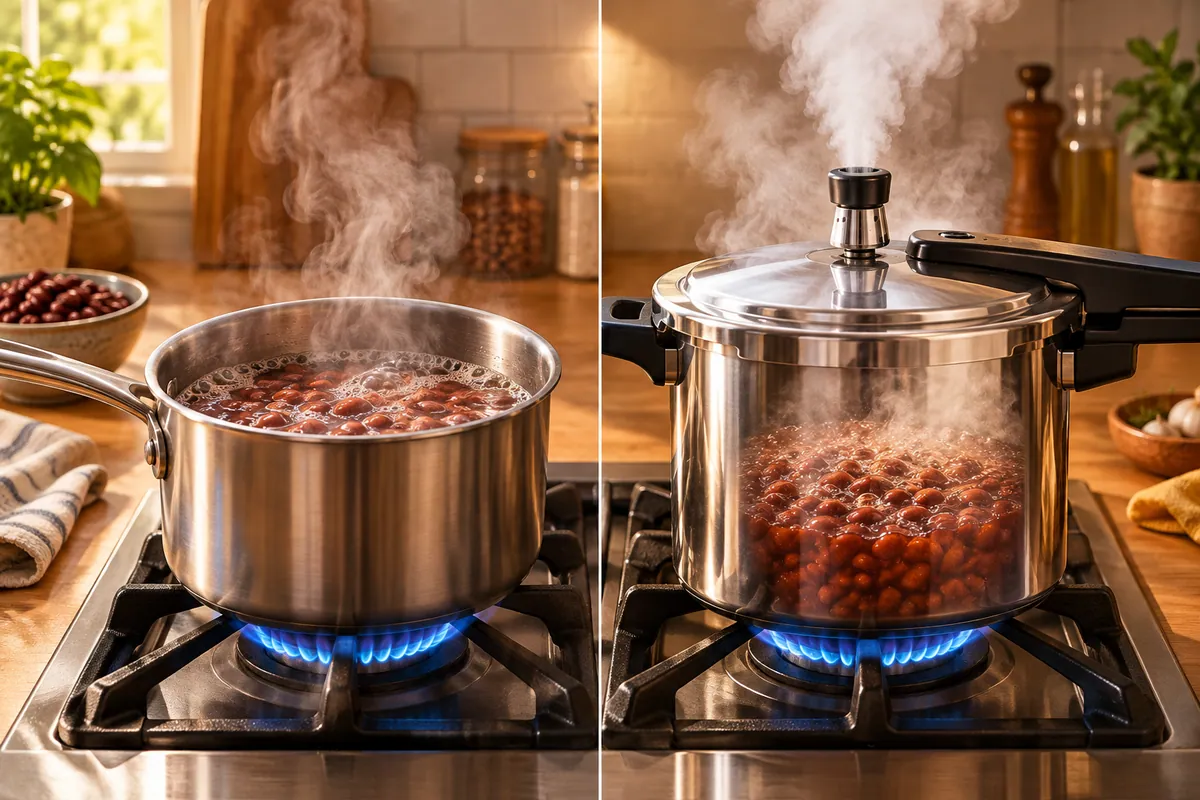
Pressure cooking is particularly effective for foods whose texture changes through prolonged moist heating. Dried beans absorb water and soften. Whole grains hydrate more rapidly. Dense vegetables such as carrots and beetroot become tender. Connective tissue in less tender cuts of meat gradually breaks down in the presence of heat and moisture, making the meat easier to chew.
The pressure itself does not magically dissolve food. Rather, the cooker creates a hotter, humid environment that speeds up the physical and chemical changes already produced by ordinary simmering. This is why pressure cooking is less useful for foods that are normally cooked dry or crisp, such as toast, chips or pastry.
Higher temperature can also encourage some browning and flavour development, particularly in food that has first been sautéed. However, a sealed pressure cooker is fundamentally a moist-heat appliance. It is not a substitute for the dry, exposed heat of an oven or frying pan.
Why the cooker needs a valve and a lock
A pressure cooker is designed to hold a controlled pressure, not an unlimited one. The regulating valve releases steam when pressure reaches its set point. This both controls the cooking temperature and prevents pressure from continuing to rise under normal operation.
Modern electric models commonly use several related mechanisms: a sealing ring, a steam-release valve, a float valve and a lid-locking system. The float valve rises when pressure has built up, and the lid should remain locked until pressure has fallen. Stovetop cookers use comparable principles, although the controls and indicators vary between designs.
These features are why the cooker should be treated as a pressurised vessel rather than simply a saucepan with a tight lid. The user manual matters because pressure settings, filling limits, release methods and safety features differ between models. The safest general rule is to wait until the pressure indicator has dropped or the cooker otherwise confirms that it is depressurised before opening it.
Why cooking time is not the whole story
Recipes often quote a short pressure-cooking time, but that is usually only the period after the cooker reaches full pressure. The pot also needs time to heat, create steam and pressurise. After cooking, it may need to release pressure naturally or through a controlled vent. The total time can therefore be noticeably longer than the number shown on the recipe.
A natural release lets the pressure fall gradually as the cooker cools. A quick release vents steam more rapidly. The appropriate method depends on the food and the appliance. Large amounts of liquid, foamy foods and some starchy dishes can behave differently during venting, which is why manufacturer instructions and recipe guidance should be followed.
The amount of liquid also matters. Pressure cooking depends on steam, and the cooker must retain enough liquid to generate it. At the same time, the pot should not be overfilled, because food and foam need room to expand and steam must circulate. Exact minimum-liquid and maximum-fill rules vary by appliance.
Does pressure cooking destroy more nutrients?
There is no simple rule that pressure cooking either preserves or destroys all nutrients. Heat, water, cooking time and whether liquid is discarded all affect the result. Pressure cooking can shorten the time some foods spend cooking and may use comparatively little water, which can help retain water-soluble compounds that might otherwise be poured away.
That does not mean every nutrient is protected. Heat-sensitive compounds can still change, just as they can during boiling, steaming or roasting. The sensible conclusion is narrower: pressure cooking changes the balance of temperature, time and moisture, and its nutritional effects depend on the specific food and method.
What to remember
- A pressure cooker traps steam so pressure rises inside a sealed pot.
- Higher pressure raises water’s boiling temperature, commonly to around 120–121°C at a typical high setting.
- The hotter liquid and steam transfer heat into food faster than ordinary simmering.
- Moisture and heat help soften beans, grains, vegetables and tough meat.
- A valve controls pressure, while locking mechanisms help prevent the lid being opened while pressurised.
- The displayed cooking time usually excludes the time needed to pressurise and depressurise the cooker.
Sources & further reading
Where this story comes from
- Preparing Meals with Pressure CookersPennsylvania State University Extension
- Guide to Using and Caring for Your Electric Programmable Pressure CookerUniversity of Idaho, Oregon State University and Washington State University Extension
- Electric Pressure Cookers: What You Need to KnowUtah State University Extension
- Melting Point, Freezing Point, Boiling PointPurdue University Department of Chemistry
- Pressure CookerGeorgia State University HyperPhysics
- The Misconceptions about Electric Pressure CookersUniversity of Florida IFAS Extension
This story was researched, drafted and illustrated with AI, then automatically checked against ANTB's structural and sourcing rules. Use the linked primary and institutional sources to verify important details.
 How things work · 6 min read
 How things work · 6 min read
 How things work · 5 min read