
In this story
A gargoyle began as a piece of drainage equipment
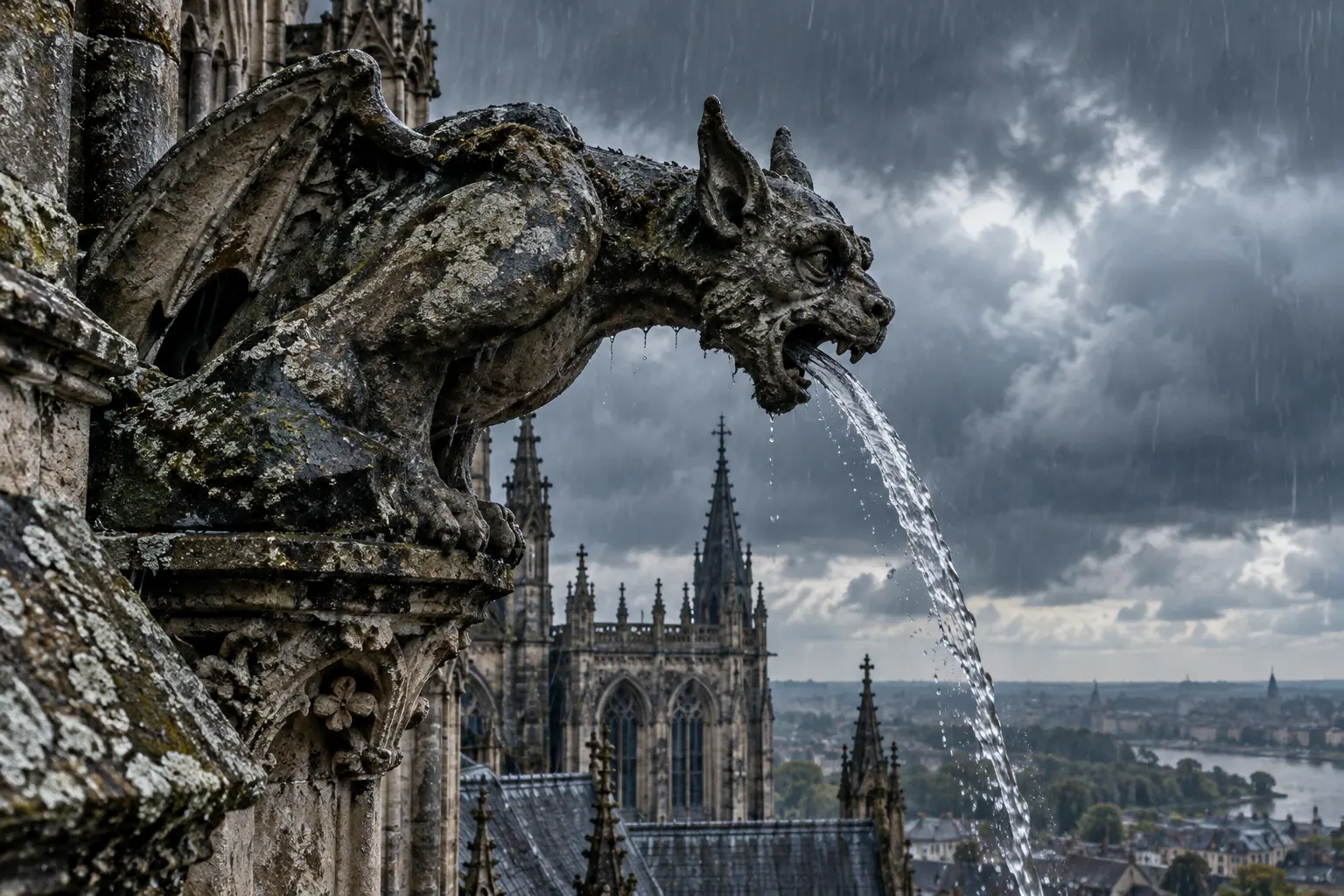
The most practical purpose of a gargoyle was to control rainwater. Buildings with broad roofs or parapet gutters collected water at high levels, and that water had to be discharged somewhere. A projecting spout carried it beyond the face of the wall, so it fell clear rather than running straight down the masonry.
Historic England describes traditional spouts as devices that throw rainwater clear of walls. This mattered because water landing beside a wall can splash back onto masonry and contribute to dampness, staining and gradual deterioration. Deep roof overhangs could perform a similar job, but where a building had parapets or concealed gutters, projecting spouts were an important part of the rainwater system.
The design could be plain, but builders also used the spout as an opportunity for sculpture. A carved animal or monster provided a visually memorable end to an otherwise ordinary channel. The open mouth or extended body was not merely theatrical: it helped form the outlet through which water left the roof.
Not every stone monster is technically a gargoyle
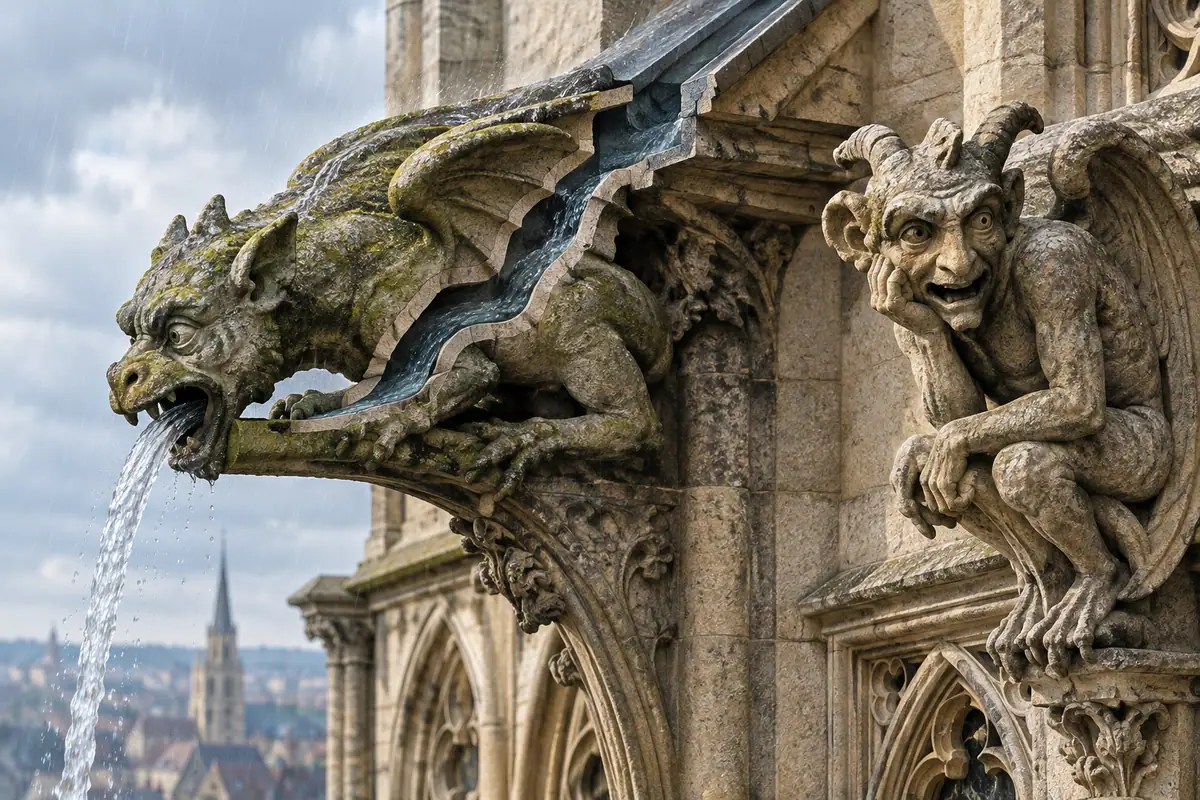
The word gargoyle is often used for any frightening or fantastic architectural carving, but the functional distinction is useful. If rainwater passes through the figure and exits from its mouth or another opening, it is functioning as a gargoyle. If the figure is attached to a façade, tower or roofline without carrying water, it is more accurately a decorative grotesque or another type of architectural sculpture.
Historic buildings can contain both kinds. The Metropolitan Museum of Art, for example, describes gargoyles as waterspouts while also discussing fantastical creatures used as protective figures on the exteriors of buildings. The Washington National Cathedral likewise distinguishes gargoyles from grotesques and other decorative details, showing that the terms can describe different roles even when the figures look similar.
The distinction also explains why some modern buildings have gargoyle-like creatures that never release rain. In later architecture, the appearance of a gargoyle became a design tradition in its own right. Builders could borrow the visual language of medieval stonework without reproducing the original drainage system.
Why use animals, demons and hybrid creatures?
Carving a creature onto a high roofline gave a building a strong visual identity. Lions, birds, dragons, human faces and hybrid beasts could make a large structure easier to remember and could express ideas about strength, vigilance or the boundary between the ordinary world and the sacred space inside.
Some of these meanings are well documented in particular cultures. The Metropolitan Museum records ancient Egyptian lion-headed waterspouts and explains that lions symbolised royal power and were used as guardians of sacred spaces. In that case, the creature’s protective meaning was connected directly to the animal’s cultural symbolism.
For medieval European buildings, the meaning was not always fixed. A frightening figure might be interpreted as a warning about sin, a guardian against evil, a reminder of the strange world outside the church, or simply an imaginative piece of carving. Modern explanations sometimes claim that gargoyles were designed to scare away demons or to convert non-Christians, but those broad claims are difficult to apply uniformly. The safest conclusion is that meanings varied by building, period, designer and viewer.
The idea is older than the Gothic cathedral
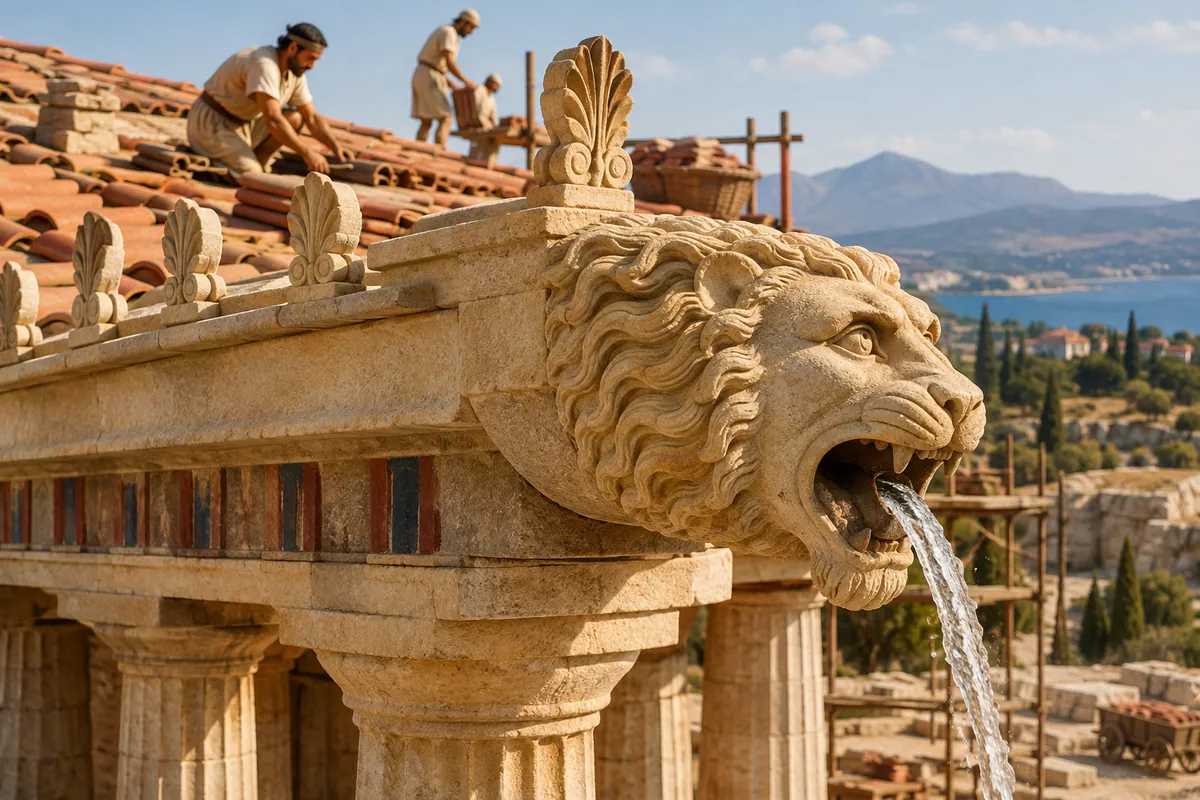
Gargoyles are strongly associated with medieval Gothic churches, but the basic idea of combining drainage with sculpture is much older. The Metropolitan Museum describes an ancient Egyptian lion’s head as a prototype for stone waterspouts used to drain the roof of a temple. It also notes that animal imagery could guard sacred spaces.
The museum’s collection of architectural tiles from Lydia, an ancient kingdom in what is now Turkey, provides another example. Some roof tiles had projecting spouts to drain water from the eaves, and the tiles could also carry animal decoration. This shows that functional roof drainage and expressive architectural ornament were already being combined long before the great medieval cathedrals of Europe.
What changed in the Middle Ages was the scale and prominence of the architecture. Large churches had steep roofs, towers, parapets and complex drainage arrangements. Their height made water management important, but it also placed the carved outlets high above the streets, where they could be seen dramatically against the sky.
Why are gargoyles especially associated with churches?
Churches made especially effective settings for gargoyles because they were tall, elaborate and built to be viewed from a distance. Gothic design used towers, pinnacles, flying buttresses and richly carved edges, creating many locations where a waterspout or decorative figure could be incorporated into the composition.
The figures also suited the visual language of medieval church architecture, which often placed scenes of everyday life, animals, monsters and symbolic creatures alongside more formal religious sculpture. A visitor looking up might see saints near the entrances, biblical scenes around portals and fantastic beings along the roofline. The mixture made the building feel populated with meaning rather than being a blank shell.
This does not mean every carving had a secret theological message. Stone carving was also a skilled trade, and artisans worked within established traditions while adapting designs to the available space. Some figures may have been carefully planned symbols; others may have been imaginative solutions to a difficult piece of stone or a chance for a craftsperson to display skill and humour.
Why do newer buildings copy them?
Gargoyles returned to fashion during the Gothic Revival of the nineteenth century, when architects and clients deliberately borrowed forms associated with medieval churches and castles. A building could use pointed arches, towers, tracery and carved beasts to suggest age, tradition or romance even when it was newly built.
The practice continued into the twentieth century. Historic England records gargoyles on buildings that are not medieval, including a late nineteenth-century commemorative fountain in Stratford-upon-Avon. The Metropolitan Museum also documents gargoyles in Renaissance and later decorative settings, where they could function as part of an ornamental vocabulary rather than as essential drainage equipment.
This is why a gargoyle on a modern or revival-style building may be purely decorative. It can signal a connection to Gothic architecture, add character to a skyline or give an otherwise formal façade a memorable face. The creature survives because the idea is visually powerful, even when the original engineering need has disappeared.
What to remember
- A functional gargoyle is a carved waterspout designed to discharge rainwater away from a building’s walls.
- Many monster-shaped carvings are decorative grotesques rather than working gargoyles.
- The combination of useful drainage and expressive sculpture existed in ancient architecture as well as medieval Europe.
- Gargoyles’ meanings were not universal: they could suggest protection, danger, imagination, status or simply skilled craftsmanship.
- Later architects reused gargoyle designs as symbols of Gothic style, even when modern gutters and downpipes did the actual drainage.
Sources & further reading
Where this story comes from
- Buildings Without Rainwater GoodsHistoric England
- Head of a LionThe Metropolitan Museum of Art
- Fragment of a terracotta architectural tileThe Metropolitan Museum of Art
- European Sculpture and MetalworkThe Metropolitan Museum of Art
- The Decades-Long Journey to Restore the National CathedralSmithsonian Magazine
- The Shakespeare Memorial Fountain, Stratford-upon-AvonHistoric England
This story was researched, drafted and illustrated with AI, then automatically checked against ANTB's structural and sourcing rules. Use the linked primary and institutional sources to verify important details.
 History · 5 min read
 History · 6 min read
 History · 6 min read