
In this story
The ridges were an anti-theft feature
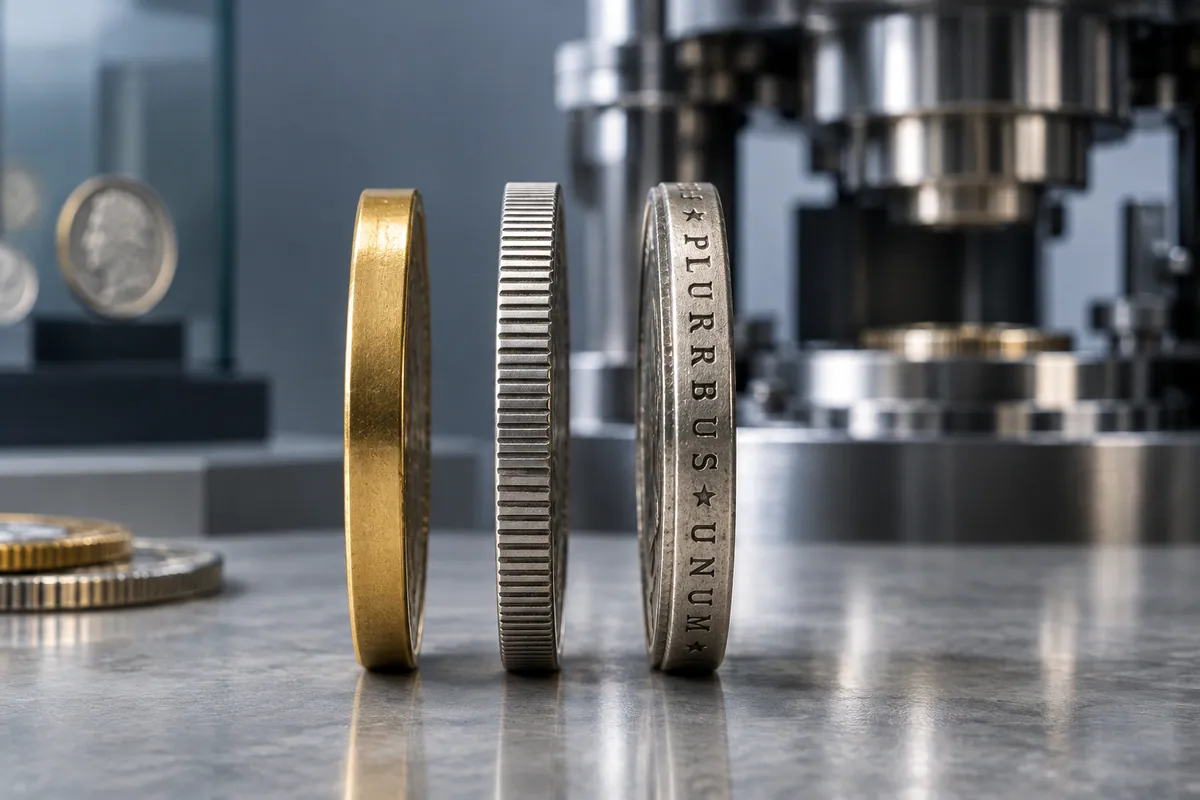
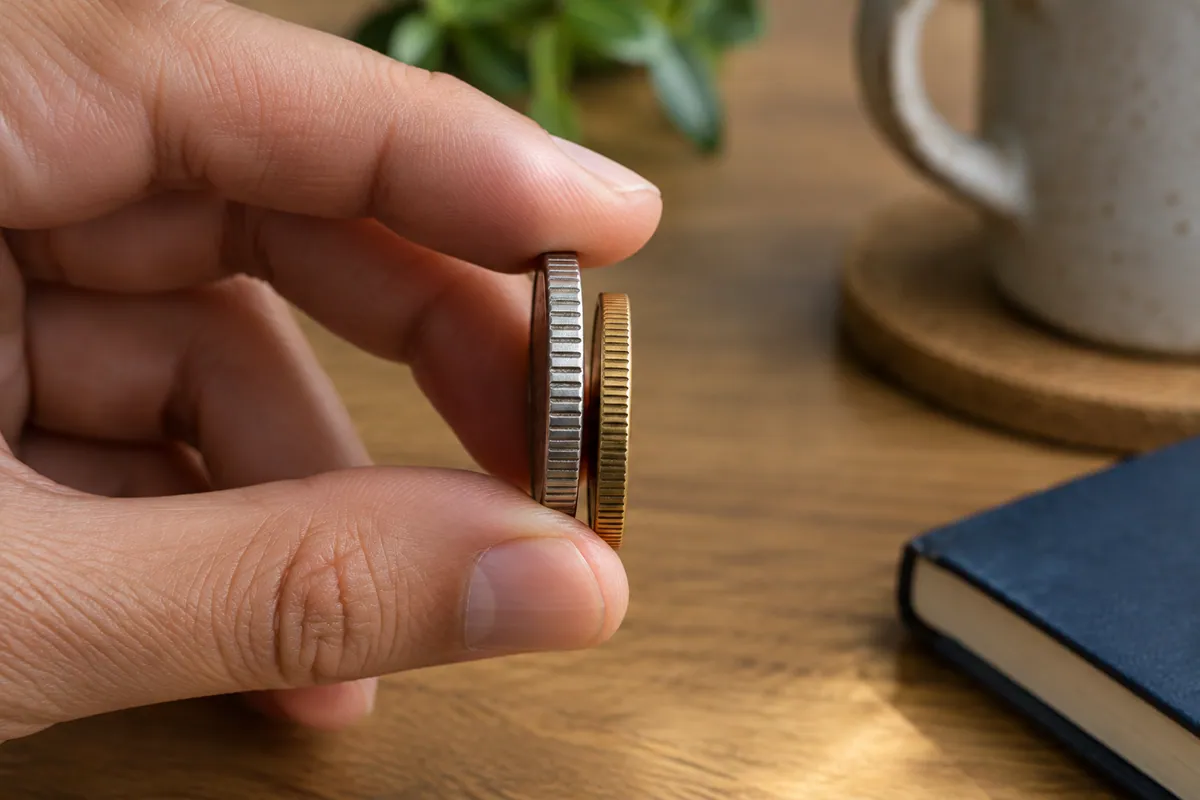
The grooves around the edge of a coin are called reeding. A coin’s edge can also be plain, lettered or decorated, while its raised border is called the rim. These are separate parts: the edge is the narrow outer surface, and the rim is the raised border on each face.4
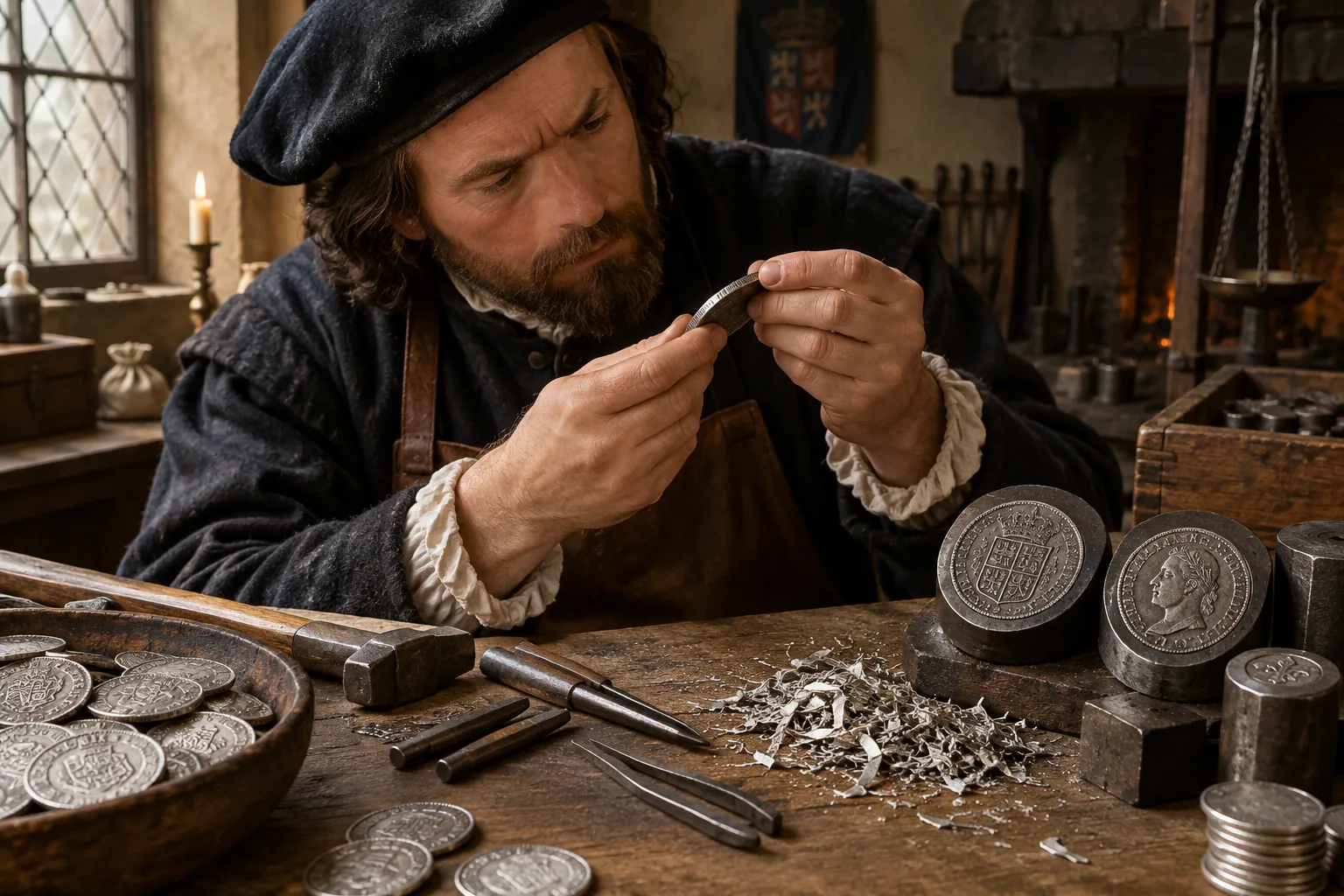
The original reason for reeding was closely tied to the materials used in older coins. Many coins were made from silver or gold, and their value depended partly on how much precious metal they contained. A person could shave or cut a little metal from the circumference, keep the filings and pass the shortened coin on at its full value. This practice was known as clipping.
A clipped coin might still look normal when placed flat beside other coins. Its edge, however, would reveal that someone had removed material. A regular pattern of grooves made interference easier to spot: if the lines were interrupted, scraped away or reduced, the coin had probably been tampered with. The Royal Mint describes milled or reeded edges as a response to clipping, which had made the weight and value of coins inconsistent.1
Why older coins were vulnerable
For centuries, many English coins were made by striking a piece of metal between engraved dies with a hammer. The blanks were cut from sheets or strips of metal, so they could be thin and uneven. Their edges did not always carry a carefully finished design.
That manufacturing method also made coins easier to alter. A clipper could remove a narrow shaving from around the edge without destroying the portrait or lettering on the two broad faces. The remaining coin could then continue circulating, even though it contained less silver or gold than it should.
The problem was not merely cosmetic. If merchants accepted underweight coins at face value, the public lost confidence in the currency. Someone travelling or trading between places might find that the same-looking coins were not all worth the same amount of metal. A visible edge treatment helped mints and users check whether a coin had retained its proper shape.
A new way of making coins made the idea practical
Reeded edges became much easier to produce when mints adopted machinery. The Royal Mint reports that England’s coin production was mechanised in the early 1660s, using rolling mills and presses.3 Machine-made coins could be more uniform in size and weight than hand-struck coins, and their thicker blanks allowed features such as milled edges and edge lettering.
The United States Mint explains that modern coin production uses a collar around the blank, or planchet, while the coin is struck.5 The collar prevents the metal from spreading too far and can form a smooth, reeded or lettered edge. This means the edge pattern is not added as an afterthought: it can be built into the pressing process.
The same production process also creates the rim around the faces of a coin. The rim helps protect the design from wear and allows coins to stack. In other words, the edge and rim are both functional parts of the coin, not simply decoration.
Why don’t all coins have ridges?
There is no universal rule that every coin must have a reeded edge. Mints choose among plain, reeded, lettered and decorated edges depending on the coin’s design, denomination, materials and security requirements.
For example, the United States Mint’s educational material notes that US pennies and nickels have plain edges, while dimes and quarters have reeded edges.6 Those differences give the denominations visibly and physically different profiles. The edge is one more part of a coin that can carry information, alongside its size, colour, shape, imagery and lettering.
Some coins use words or symbols around the edge instead of grooves. Others have unusual shapes or combinations of edge treatments. These features can make a coin harder to confuse with another denomination and can help a user recognise it without looking directly at both faces. The particular choice belongs to the issuing mint, so a ridged edge should not be treated as a rule about value or authenticity by itself.
Do the grooves still prevent clipping today?
The original anti-clipping purpose matters less for many modern circulating coins because they are generally made from base-metal alloys rather than valuable quantities of silver or gold. A person who scraped a modern coin would usually collect metal worth less than the coin’s face value, while leaving obvious damage behind.
Even so, the historical solution has not disappeared. Reeded edges remain part of established coin designs and minting systems. They can help people distinguish denominations, give a coin a recognisable physical profile and make certain kinds of alteration easier to notice. Edge features can also form part of a wider set of anti-counterfeiting measures.
It is important not to overstate what the grooves can do. A reeded edge does not prove that a coin is genuine, and a plain edge does not prove that it is fake. Mints assess authenticity through a combination of details, including dimensions, weight, metal composition, design, edge treatment and the way the coin responds to specialised testing.
What to notice next time you hold a coin
Turn a coin on its side and look at the third surface. Is it smooth, lined, lettered or patterned? Then compare it with another denomination from the same currency. You may find that the faces look similar at a glance, but the edge provides a quick second layer of information.
The ridges are therefore a small surviving piece of monetary history. They began as a practical response to a serious weakness in precious-metal coinage: the possibility that someone could take value away from a coin without immediately being caught. Modern presses can reproduce the pattern with great consistency, so a feature born from seventeenth-century coin crime still appears in everyday change.
What to remember
- Coin ridges are called reeding, and the grooved edge is also known as a milled edge.
- Their original purpose was to expose clipping: shaving precious metal from the edge of a coin.
- Machine minting made uniform reeded edges easier to produce from the seventeenth century onwards.
- Modern coins may retain reeding for identification, design continuity and additional security value, although it does not prove authenticity.
- A coin’s edge is different from its rim: the edge wraps around the outside, while the rim is the raised border on each face.
Sources & further reading
Where this story comes from
- The Milled Edge MotifThe Royal Mint
- Clippers and Counterfeiters: Information PackThe Royal Mint
- The Evolution of CoinageThe Royal Mint
- Anatomy of a CoinUnited States Mint
- Coin ProductionUnited States Mint
- Coin SpecificationsUnited States Mint
This story was researched, drafted and illustrated with AI, then automatically checked against ANTB's structural and sourcing rules. Use the linked primary and institutional sources to verify important details.
 History · 5 min read
 History · 6 min read
 History · 6 min read