
In this story
There is no natural “correct” side
A two-way road needs a shared convention, but there is no technical reason that traffic must use the left or right. The important thing is consistency: vehicles travelling in opposite directions need predictable paths, and overtaking, junctions and road signs must all be designed around the same rule.
This means that left-hand traffic and right-hand traffic are mirror-image systems rather than competing technologies. In a left-driving country, vehicles generally keep left and overtake on the right. In a right-driving country, vehicles generally keep right and overtake on the left. Road layouts, signs, intersections and vehicle controls are then arranged to match.
The choice was usually made long before motor cars. Early roads were shared by people walking, riders, carts, coaches and animals. Local habits could vary, and a formal rule became more valuable as roads grew busier and vehicles became faster. The historical record is therefore less tidy than the familiar explanations suggest.
Why Britain became associated with keeping left
Britain’s left-hand rule emerged from older road customs and was gradually reinforced by legislation. The Highway Act 1835 stated that when drivers of wagons, carts or other carriages met on a highway, they were to keep to the “left or near side” of the road. That law helped turn a customary practice into an enforceable national rule.
Earlier British measures also regulated traffic in particular places. London’s growing traffic required practical arrangements for carriages using bridges and crowded streets. Over time, the rule became part of the wider British system of road use and was carried into many territories governed or heavily influenced by Britain.
This is why left-hand traffic is common in places such as Australia, New Zealand, India and South Africa. Colonial governments brought British road laws, vehicles and driving practices with them. Local conditions and later political decisions sometimes produced exceptions, but inherited rules were usually easier to maintain than to replace.
The sword explanation is memorable—but not proven
A popular explanation says that people once kept left so a right-handed rider could face an approaching stranger with their sword arm nearest the centre of the road. Another version says that mounting a horse from the left side, while wearing a sword on the left hip, made riding on the left more convenient and safer.
The idea is physically plausible, and similar explanations have been offered for walking, riding and military movement. However, transport historians caution that there is no single, well-documented origin story that explains all left-driving countries. Evidence for ancient and medieval road behaviour is patchy, and customs could differ between regions, types of traffic and social groups.
The safest conclusion is that weapons and riding habits may have influenced some behaviour, but they cannot by themselves explain the modern map. The formal rules that survived were shaped by later traffic conditions, laws, political power and economic connections.

Why many countries moved to the right
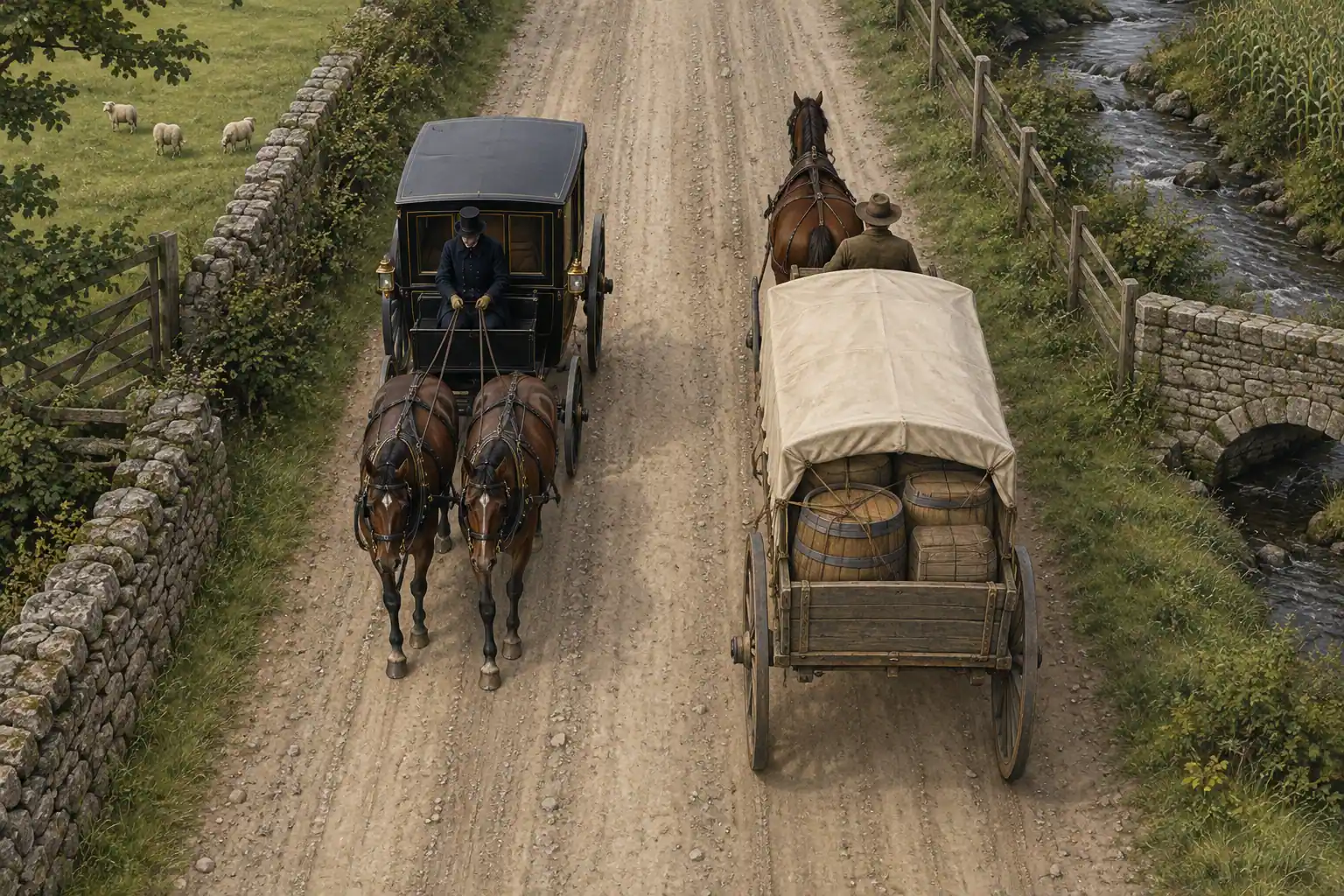
Right-hand traffic developed through several routes. In the United States, the Federal Highway Administration’s historical review found that right-hand travel was already widespread in colonial America. The growth of large horse-drawn freight wagons helped reinforce the practice. A wagon driver often rode on the left rear horse, using the right hand for a whip, and keeping to the right gave the driver a better view of the clearance between passing vehicles.
France and other parts of continental Europe also developed right-hand traditions. The French Revolution and the subsequent expansion of French influence are often credited with spreading right-hand traffic, but historians warn that the story is more complicated than a single political decree. Different regions adopted rules at different times, and local traffic customs did not always change together.
As governments built national road systems, they increasingly preferred one rule across a whole country. Later, neighbouring countries often adopted the same side to make cross-border travel easier. This gradually made right-hand traffic dominant across continental Europe and much of the Americas, while Britain and many of its former colonies retained left-hand traffic.
Cars made the difference visible
Motor cars did not invent the left-versus-right divide, but they made it much more consequential. Drivers needed a clear view of the road edge, approaching traffic and vehicles being overtaken. This encouraged countries to position the steering wheel on the side nearest the centre of the road: generally the right in left-driving countries and the left in right-driving countries.
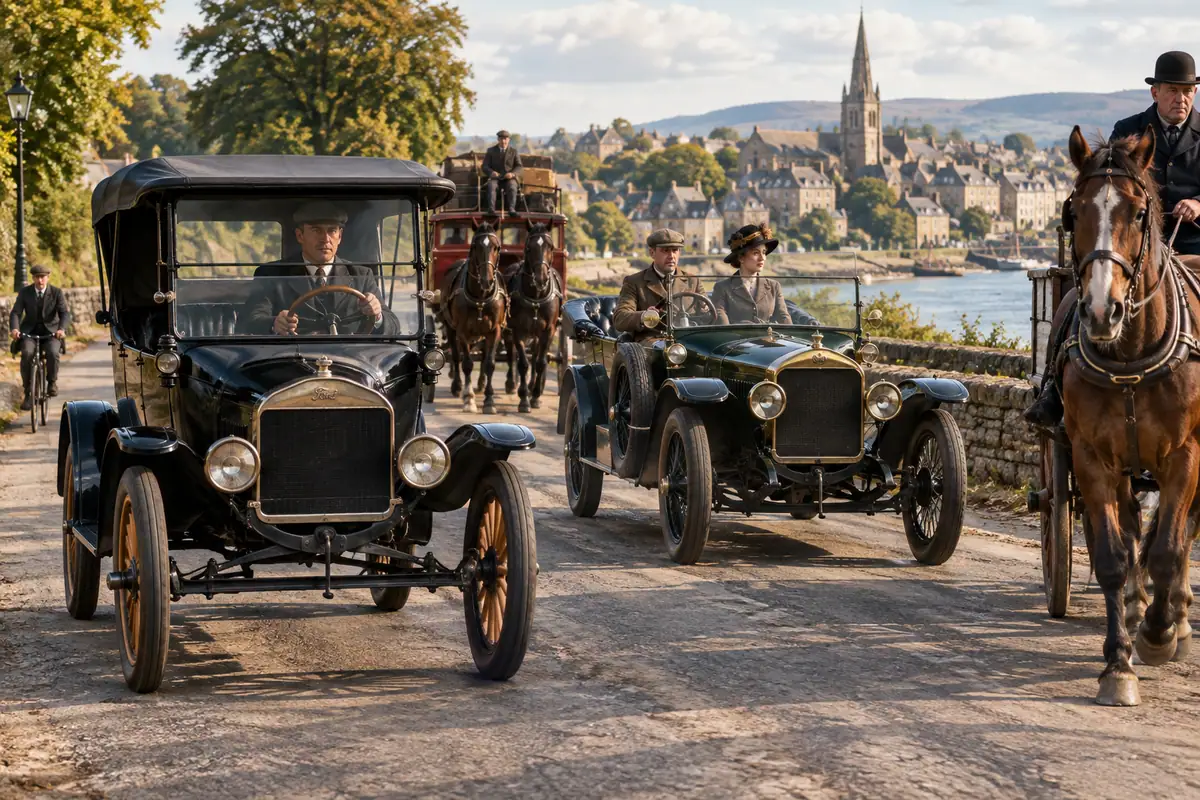
That arrangement is practical rather than universal. The Smithsonian’s National Museum of American History notes that early cars had steering wheels on both sides. The left-positioned steering wheel became especially influential in the United States after the Ford Model T adopted it in 1908. Mass production then helped make that design a standard for right-hand traffic.
Once a country had roads, signs, vehicles, driving schools and traffic laws built around one side, changing became expensive and disruptive. A switch required new signs, road markings, junction designs, buses, vehicle imports and public education. The benefits of matching a neighbouring country could be real, but so were the costs of changing an entire transport system.
Why the rule still matters today
For most drivers, the side of the road feels obvious because every part of the local system reinforces it. Roundabouts, turning lanes, overtaking rules, pedestrian crossings, road signs and the position of the driver’s seat all provide repeated cues. The difficulty appears when someone crosses a border or hires a car in a country with the opposite convention.
The British Highway Code, for example, tells drivers to keep left unless signs or markings indicate otherwise. That rule is not a statement about geography or engineering superiority; it is a reminder of the shared convention that makes Britain’s roads work.
So the modern answer is historical rather than mechanical. Countries drive on the left or right because earlier societies settled on different arrangements, governments codified them, empires and trade networks spread them, and later generations inherited the infrastructure. Once millions of people had learned one system, consistency became more valuable than starting again.
What to remember
- There is no universal technical reason to prefer the left or right side of the road.
- Britain’s keep-left practice was formalised in law, including the Highway Act 1835.
- The sword-and-horse explanation is plausible but not a proven single origin for left-hand traffic.
- Large freight wagons, local laws, revolutions, colonial rule and neighbouring countries all helped shape traffic conventions.
- Cars and mass production reinforced existing road systems by standardising steering-wheel positions and vehicle design.
- Changing sides is possible, but it requires a costly redesign of a country’s transport system.
Sources & further reading
Where this story comes from
- On The Right Side of the RoadFederal Highway Administration, United States Department of Transportation
- Highway Act 1835UK Legislation
- History of road safety, The Highway Code and the driving testDriver and Vehicle Standards Agency, GOV.UK
- The Highway Code: Using the roadDepartment for Transport, GOV.UK
- Technological ChoicesNational Museum of American History, Smithsonian Institution
- The rule of the road: keeping left or right in traffic?Association for European Transport
- Why do some countries drive on the left and others on the right?WorldStandards
This story was researched, drafted and illustrated with AI, then automatically checked against ANTB's structural and sourcing rules. Use the linked primary and institutional sources to verify important details.
 History · 5 min read
 History · 6 min read
 History · 6 min read