
In this story
How clock time took shape
Look at any clock and its divisions feel inevitable: 24 hours, 60 minutes, 60 seconds. They are not laws of nature. A day comes from Earth’s rotation, but almost everything below that scale is a human choice—one refined over thousands of years.
The cleanest explanation is not “the Babylonians invented the minute.” It is a relay. Different societies supplied different parts, and the system survived because it proved useful, teachable and deeply embedded in astronomy, navigation, machinery and daily life.
First came the hour, not the minute
Ancient Egyptian timekeeping helped establish the habit of dividing daylight and night into twelve parts. Those early hours were not always equal: a daylight hour could be longer in summer and shorter in winter. The later 24-hour scheme joined twelve daylight hours with twelve night hours, then Greek astronomers advanced the use of equal hours for calculation.
This explains the day’s broad architecture, but it does not yet explain sixty. For that, we turn east to a mathematical system exceptionally good at handling fractions.
Why sixty is a fraction-friendly number
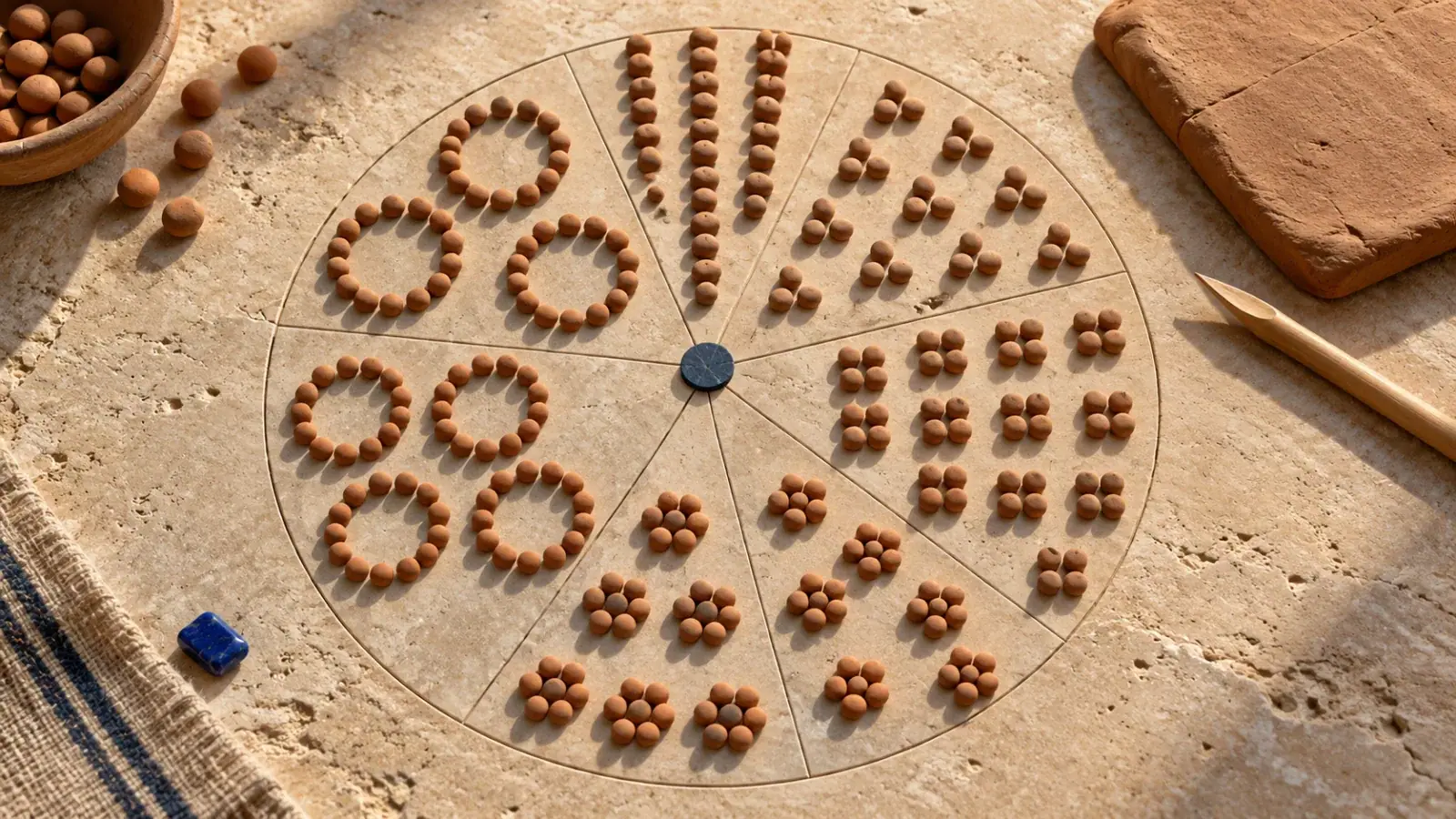
Babylonian scribes used a sexagesimal, or base-60, place-value system. We count in base ten: after nine comes a new column. In base sixty, a new place begins after 59. That may sound cumbersome, but sixty has a practical advantage—it can be split evenly in many ways.
Halves, thirds, quarters, fifths and sixths can all be expressed without awkward remainders. That flexibility suited astronomy and geometry, where angles, cycles and fractional measurements mattered. Surviving tablets show sophisticated base-60 calculation, although historians cannot reduce the system’s origin to one certain reason.
Minutes and seconds began as small parts on paper
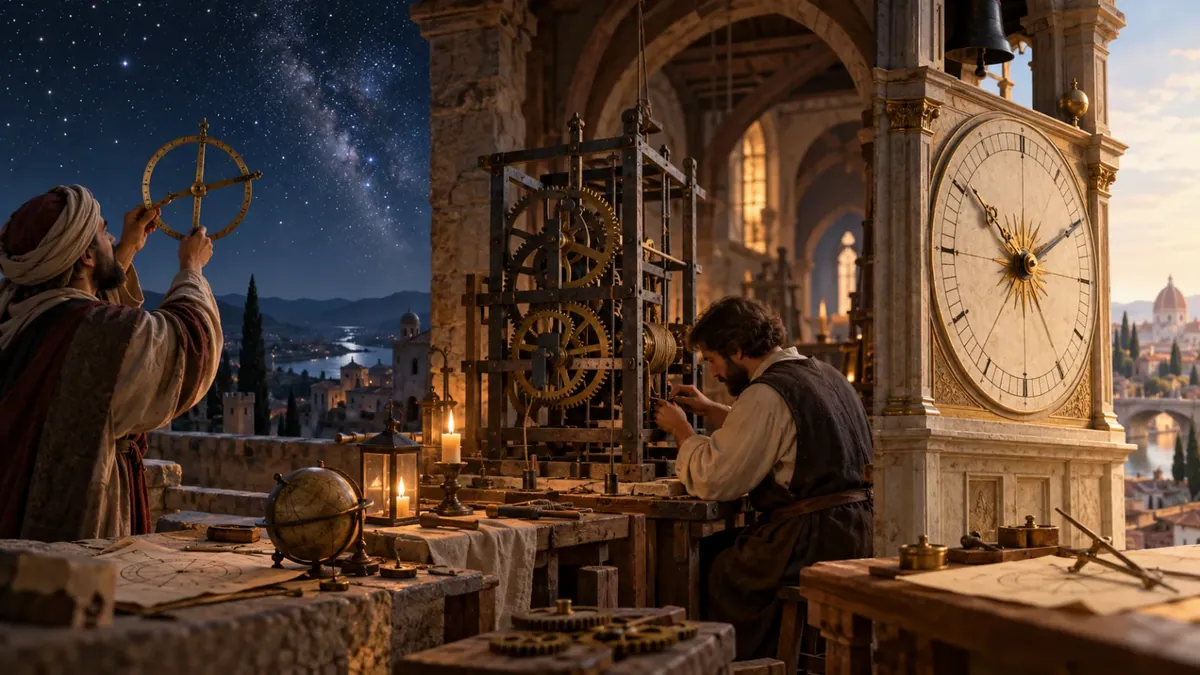
Greek and later astronomers carried sexagesimal calculation forward. A degree—or an hour—could be divided into a first small part and then a second small part. The words “minute” and “second” reflect those successive subdivisions: the first minute part and the second minute part.
For most people, those divisions were initially too fine to matter. Early mechanical clocks commonly indicated only the hour. Minute hands became useful as mechanisms improved; dependable second hands required greater precision again. The clock face did not create the mathematics—it made an older mathematical language visible in ordinary life.
The modern second no longer depends on the Sun
Earth is a wonderfully intuitive clock, but not a perfectly uniform one. Its rotation varies slightly. Modern scientific time therefore defines the second through atomic physics: exactly 9,192,631,770 periods of radiation associated with a transition in the ground state of the caesium-133 atom.
The definition changed, but the inherited ladder remained. Sixty atomic seconds make a minute; sixty minutes make an hour. The International System of Units treats the second as its base unit while accepting the minute and hour for use alongside it.

Could we use decimal time instead?
Yes. Decimal schemes have been proposed and briefly tried. But time is a network, not merely a notation. Clocks, timetables, laws, navigation, software, language and habit all depend on the same convention. Replacing it would impose enormous coordination costs while offering limited everyday benefit.
That persistence is the deeper story. Sixty survived not because it is perfect, and not because one civilisation imposed a finished system, but because useful conventions accumulate. Each generation rebuilt the clock with better instruments while preserving a structure the rest of society already understood.
What to remember
- The day is natural; its named subdivisions are cultural inventions.
- Egyptian traditions helped shape the 24-hour day.
- Babylonian base-60 mathematics made fractional division convenient.
- Astronomers used minute and second subdivisions before clocks commonly displayed them.
- Today’s second is atomic, but minutes and hours retain the ancient ratio.
Sources & further reading
Where this story comes from
- Timekeeping and clocks FAQsNIST
- Why is a minute divided into 60 seconds?NIST
- Introduction to the secondNIST
- Babylonian tablet Plimpton 322Smithsonian
- Babylon learning resourceBritish Museum
- Units outside the SINIST
We link to primary or museum sources wherever practical. Historical interpretations are stated cautiously where evidence does not support one certain origin story.
 History · 5 min read
 History · 6 min read
 History · 6 min read