
In this story
A familiar ritual with an uncertain beginning
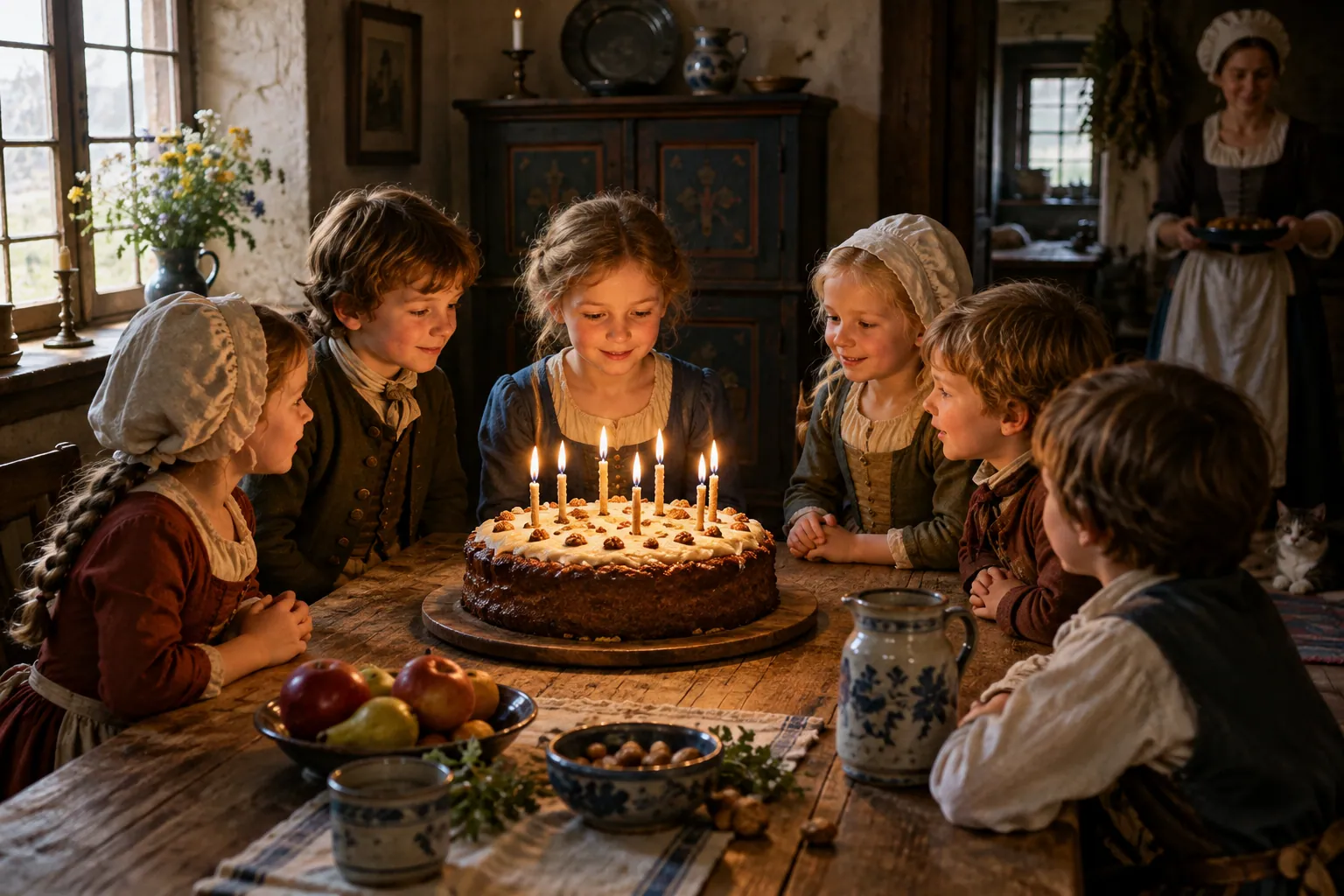
At a birthday party, the sequence is almost automatic: a cake appears, candles are lit, everyone sings, the birthday person makes a silent wish and then tries to extinguish the flames in one breath. The ritual is so familiar that it can feel as if it must have existed unchanged for thousands of years.
It almost certainly did not. Historians can trace separate ingredients of the custom — birthday feasts, decorated cakes, candles, wishes and the symbolism of fire — much further back than the complete ceremony. But a continuous line from an ancient religious ritual to the modern birthday cake has not been demonstrated.
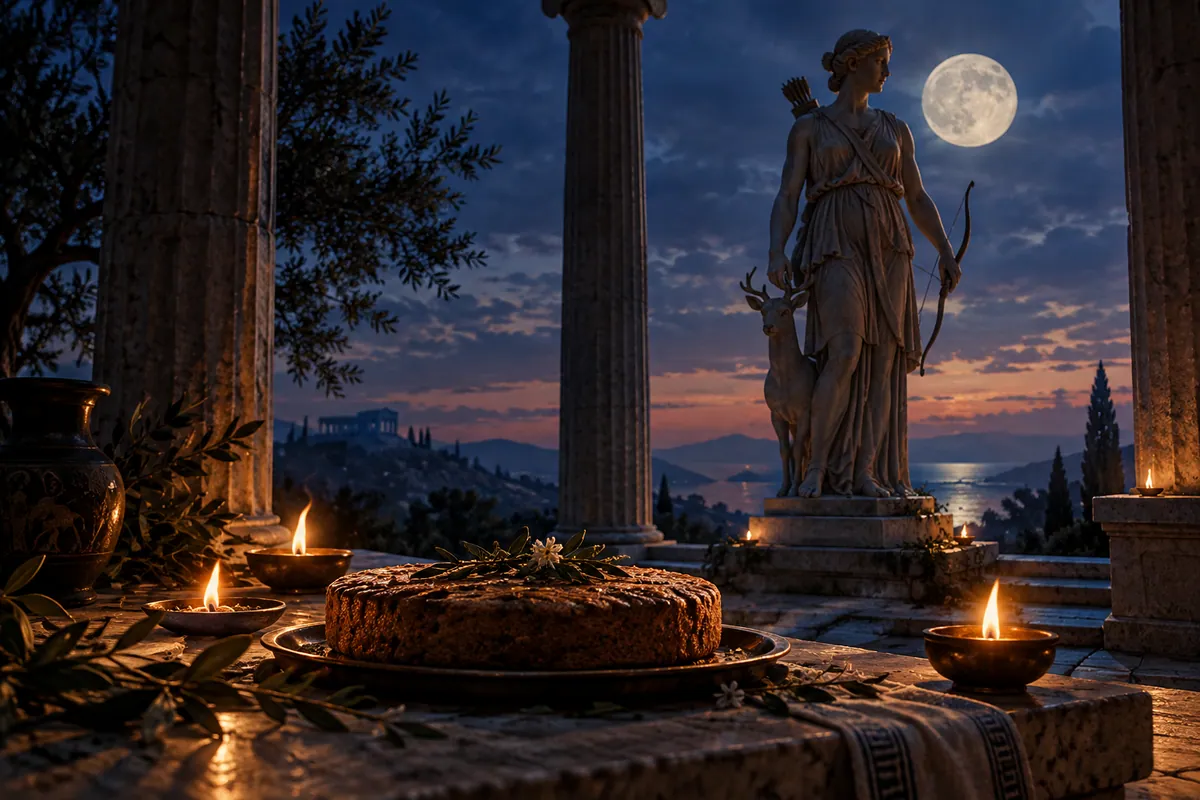
That distinction matters because one popular explanation says birthday candles began in ancient Greece, with round cakes offered to Artemis, the goddess associated with the moon. The cakes are said to have been lit so they would glow like the moon, while smoke carried prayers upwards. This is an appealing story, but the evidence is indirect. Ancient Greek offerings and candles are documented in various contexts; a clearly documented Greek birthday cake with candles is not.
The ancient Greek theory
The Greek explanation is usually connected with Artemis, whose worship involved cakes and other offerings. Round shapes, moon imagery and flame symbolism make the theory seem plausible. Fire was also widely used in religious ceremonies across the ancient Mediterranean, so it is reasonable to think that later customs could have borrowed ideas about light, protection and communication with the divine.
What cannot safely be claimed is that a modern birthday party is simply an unchanged Greek ceremony. The surviving evidence does not show ancient Greeks gathering around a cake, singing to a person, making a private wish and blowing out candles. That familiar combination belongs to a much later social world.
The most accurate conclusion is that Greek rituals may have contributed to the long cultural association between round cakes, candles and wishes, but they are not a proven single-point origin for the birthday custom. The story is best treated as a possible influence or retrospective explanation rather than an established fact.
The stronger link: German children’s birthdays
The modern tradition is more securely associated with German-speaking Europe, particularly the Kinderfest or children’s birthday celebration. By the eighteenth century, German accounts describe birthday cakes decorated with candles representing the child’s years of life. Some versions included an additional candle, sometimes explained as a symbol of the year still to come or of continued life.
A Smithsonian educational publication describes the German Kinderfest as a children’s festival featuring a cake topped with lighted candles, sometimes called the “light of life”. It also records the belief that a child’s secret wish would be granted if the candles could be blown out in one breath. This is recognisably close to the ritual practised today.
The custom was not necessarily identical in every household. Candles were expensive compared with modern mass-produced birthday candles, and elaborate cakes were more accessible to wealthy families. Birthday celebrations themselves were also not equally common across all social classes. For much of history, birthdays were chiefly associated with rulers, noble households and other socially important people rather than with every child and adult.
A birthday cake enters the historical record
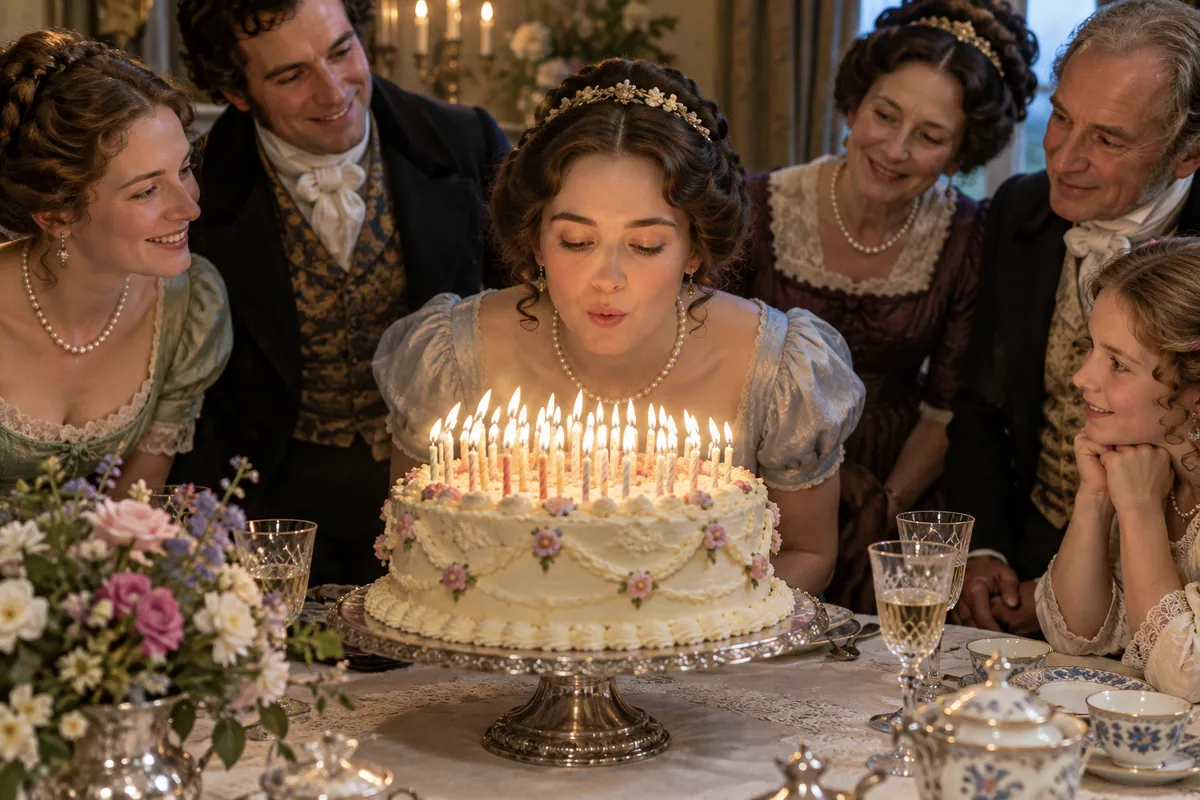
One useful piece of evidence comes from Johann Wolfgang von Goethe. Accounts of his fifty-second birthday in 1801 describe a large cake with many burning candles, with the number of candles corresponding to his age. The account is important not because Goethe invented the custom, but because it shows that illuminated birthday cakes were established enough to appear at an adult celebration in German-speaking Europe by the beginning of the nineteenth century.
Goethe’s account also reveals a practical problem hidden by modern number-shaped candles: older cakes could require dozens of individual flames. The candles were not merely decorative. They represented the person’s accumulated years and, in some accounts, the years hoped for in the future.
This evidence places the recognisable cake-and-candle combination in a much more recent setting than ancient Greece. It does not identify one inventor or one first birthday party. Customs usually develop gradually, with families adapting older symbols to new celebrations.
Why blow them out, and why make a wish?
The exact moment when blowing became central is difficult to document. The symbolism is easier to understand. A lit candle gives a birthday celebration a visible focal point: the room becomes briefly darker, the flames draw everyone’s attention to one person and the act of extinguishing them creates a small moment of suspense.
The wish adds a private element to a public celebration. Everyone knows that something has been wished for, but nobody else is meant to know what it is. That combination — a shared ceremony followed by a secret hope — helps explain why the custom feels meaningful even for people who do not regard it as magical.
The one-breath rule may also have practical origins. It turns a simple act into a test, especially for children. If the celebrant succeeds, the party gets a satisfying conclusion; if not, the group laughs and the candles are relit or extinguished another way. Over time, the idea that a wish comes true only when all the candles go out became part of the tradition.
How a European custom became a global one
Birthday celebrations became much more widespread during the nineteenth and twentieth centuries. Greater prosperity, urban living, industrial food production and the growing cultural importance of childhood all helped make birthday parties easier to organise. Cakes, candles, greeting cards and decorations could be bought rather than made entirely at home.
In the United States, German migration helped carry the cake-and-candle custom into new communities. Later, department stores, packaged cake mixes, greeting-card companies, children’s books, films and television gave the ritual a common form. The National Museum of American History describes birthdays becoming an increasingly important part of American consumer and family culture, with cakes and related products becoming a substantial market.
That is why the ceremony can now look universal while still varying considerably from place to place. Some families use one candle, some use a candle for each year, some use numerals and some use no candles at all. The cake may be replaced by cupcakes, fruit, pastries or another festive food. The underlying idea is not the object itself but the public marking of one person’s passage through time.
What to remember
- The modern birthday candle tradition is more securely linked to German-speaking Europe than to ancient Greece.
- Ancient Greek candle-and-cake rituals may have influenced later symbolism, but a direct origin has not been proven.
- German children’s birthday celebrations included cakes with candles by the eighteenth century, and Goethe described a candle-covered birthday cake in 1801.
- Blowing out the candles turns the celebration into a shared performance and the private wish gives it a personal meaning.
- The custom spread widely as birthdays, commercial baking and popular media made birthday parties more common.
Sources & further reading
Where this story comes from
- Blowing out birthday candles is surprisingly ancientNational Geographic
- Art to Zoo: CelebrationSmithsonian Institution
- The festive history of American birthdaysNational Museum of American History, Smithsonian Institution
- The Autobiography of GoetheProject Gutenberg
This story was researched, drafted and illustrated with AI, then automatically checked against ANTB's structural and sourcing rules. Use the linked primary and institutional sources to verify important details.
 Culture · 6 min read
 Culture · 6 min read
 Culture · 6 min read