
In this story
Black is a custom, not a law of grief
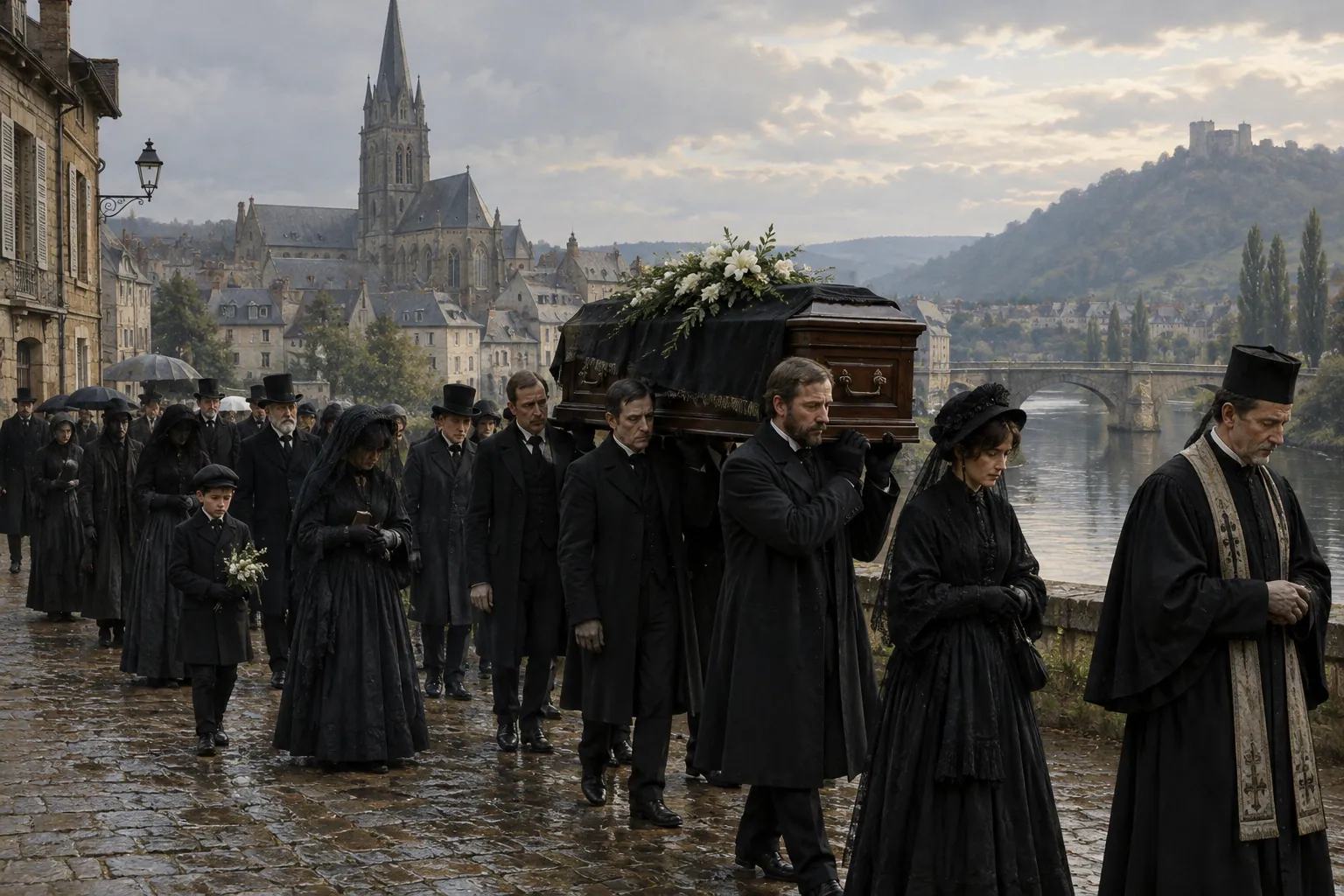
When someone dresses in black for a funeral, the clothing usually communicates several things at once: sorrow, respect for the dead and an awareness that the occasion is solemn. It can also make the mourner less visually conspicuous. In that sense, black works as a social signal. It tells other people that ordinary rules of dress and behaviour have been temporarily replaced by the rituals of loss.
That meaning is powerful, but it is not universal. Funeral clothing varies widely between religions, countries, communities and families. In some traditions, white is associated with death or mourning; in others, mourners may wear red, undyed clothing, specific robes or everyday clothes chosen by the family. The familiar Western association between black and funerals is therefore best understood as a historical convention rather than a natural response to death.
An ancient Roman connection
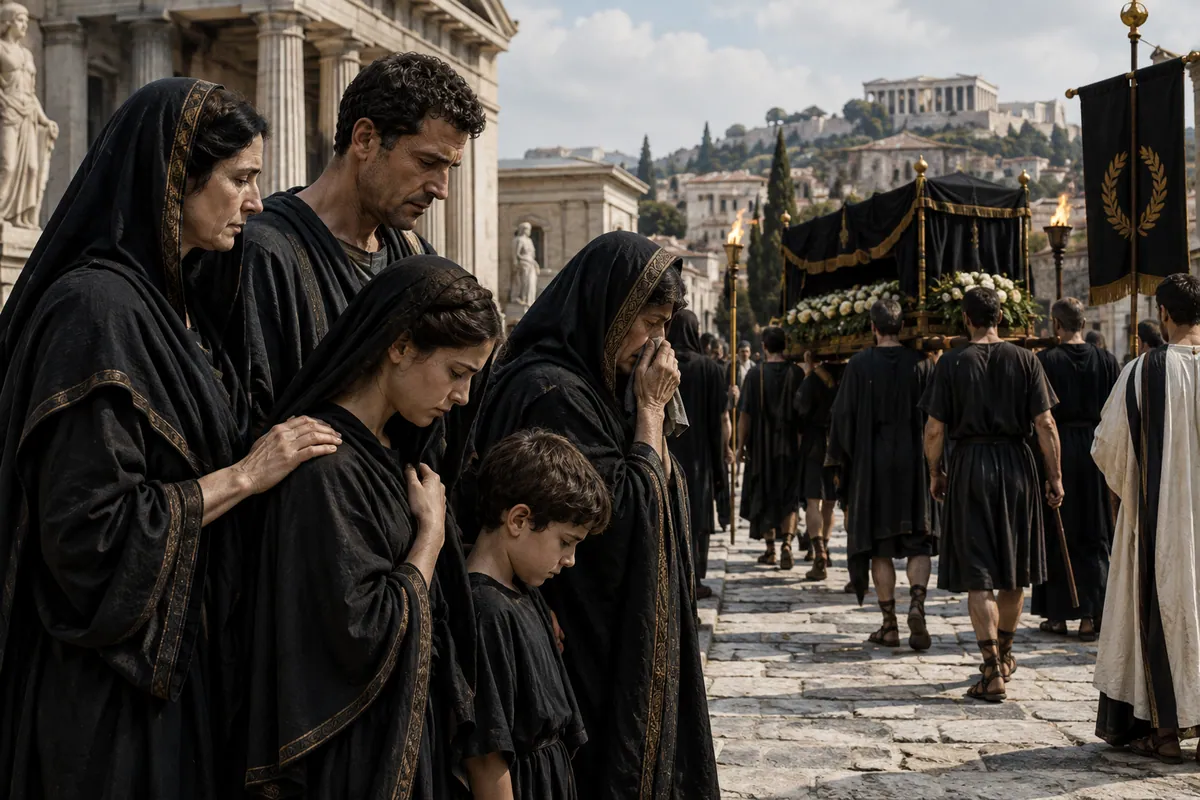
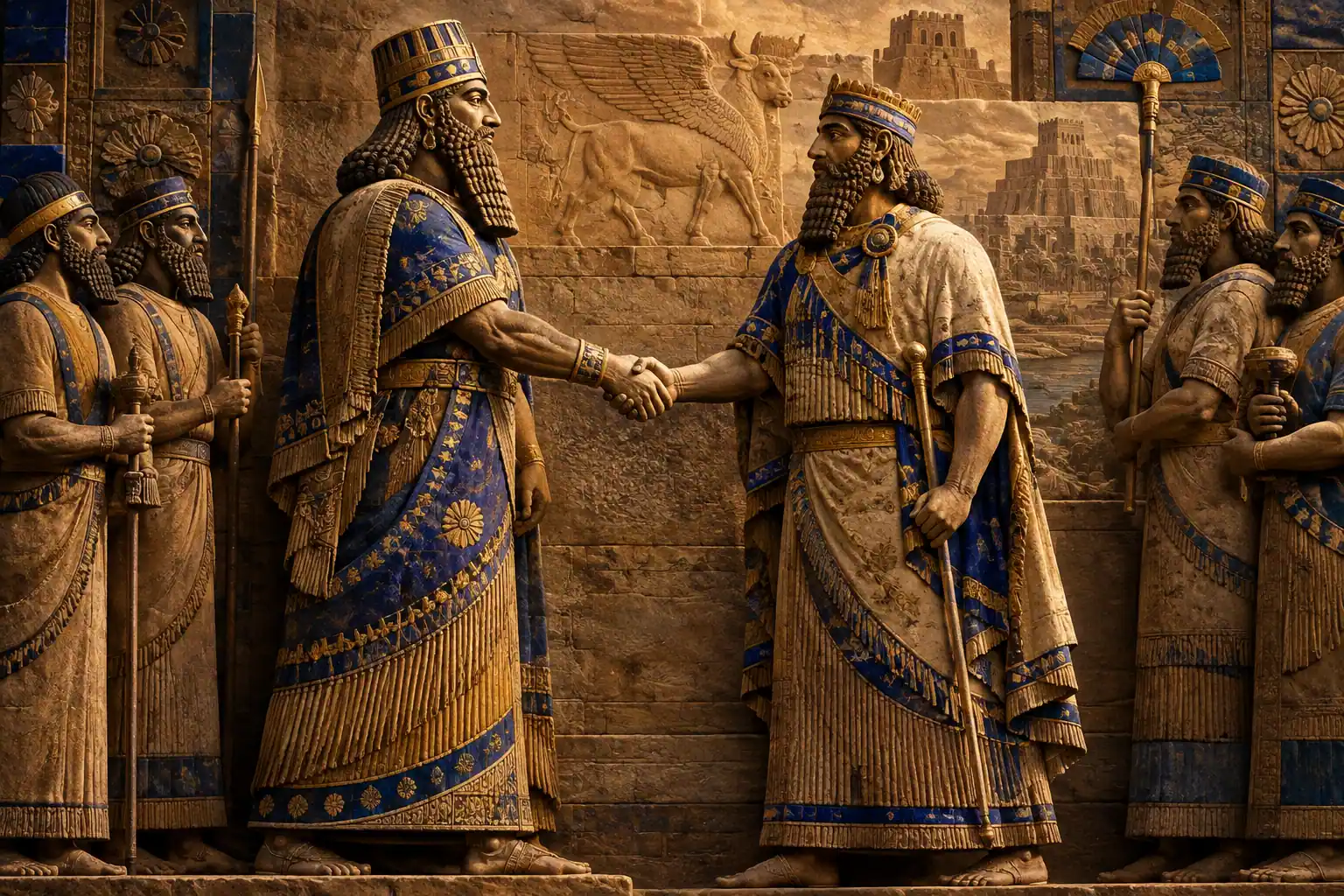
One important strand of the tradition can be traced to ancient Rome. Roman mourners could wear dark clothing during a period of grief, and black became connected with public mourning. The custom was not simply about colour symbolism in the modern sense. Clothing helped distinguish mourners from other members of society and made a private loss recognisable in public.
Roman funerals also involved formal behaviour, family roles and ritual restrictions. A person’s clothes were part of that visible system. Dark dress could mark a mourner as someone temporarily set apart from everyday social life. This does not mean that every later black funeral garment descended in a simple, uninterrupted line from Rome. Customs changed repeatedly over the centuries, and European societies did not all dress for grief in the same way.
Why the nineteenth century made black so familiar
The strongest influence on modern Western funeral dress came much later, during the nineteenth century. Mourning became especially elaborate in Britain, Australia and the United States during the Victorian period. Black clothing was worn not only at the funeral but, for close relatives, for a defined period afterwards. The Australian Museum records that middle-class Victorian children could be expected to wear full black mourning clothes for a year after the death of a parent or sibling.
Mourning dress was often governed by social expectations. The relationship to the deceased, the sex and age of the mourner, and the amount of time since the death could affect what was considered appropriate. Full mourning generally meant subdued black clothing, while later stages could permit changes in fabric, decoration or colour. The transition out of mourning could therefore be displayed through clothing rather than announced in words.
This system made black highly visible in everyday life. A person in mourning might be encountered in the street, at church, in shops or visiting friends. Clothing announced that the wearer had suffered a loss and that others should respond with sympathy and restraint. It also helped establish a shared public language for grief at a time when death was a more frequent presence in ordinary households.
Queen Victoria and the culture of mourning
Queen Victoria’s prolonged mourning after the death of Prince Albert in 1861 helped reinforce black as the emblematic colour of grief in the English-speaking world. Her example did not create mourning dress from nothing, but it gave enormous social visibility to an already established practice. The Metropolitan Museum of Art describes black mourning dress as reaching its peak during Victoria’s reign in the second half of the nineteenth century.
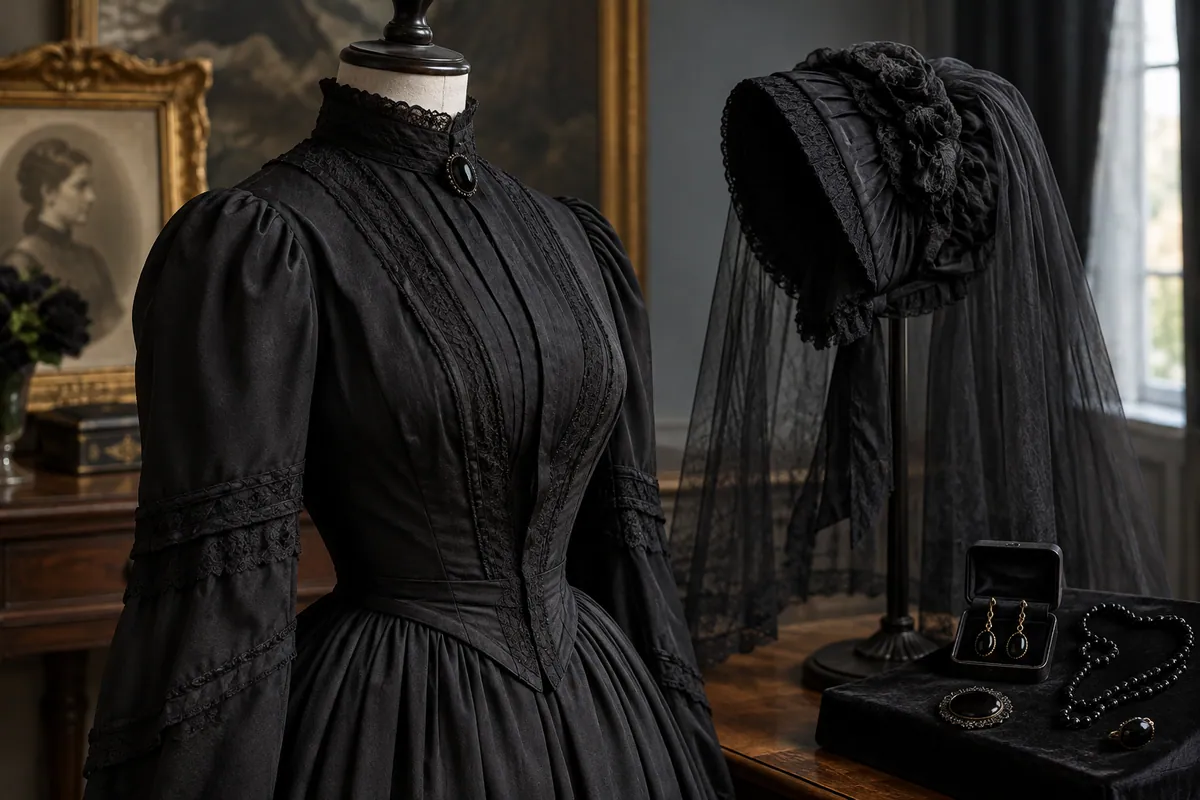
Victorian mourning was also an industry. Special fabrics, jewellery, veils, bonnets and other accessories were produced for people expected to observe mourning rules. Black clothing could be plain and deliberately austere, but it could also be expensive and carefully designed. Mourning therefore expressed grief while also displaying respectability, family position and a willingness to follow social expectations.
This apparent contradiction is part of what makes Victorian mourning interesting. Black was meant to show self-denial and sorrow, yet mourning clothes could involve considerable spending. Historians and museum collections show that mourning was not merely a personal emotion translated into colour. It was a public practice shaped by etiquette, commerce, gender expectations and class.
Why black came to symbolise restraint
Black has several qualities that made it suitable for mourning in European societies. It is visually subdued, does not attract attention in the same way as bright colours and can create a unified appearance at a formal gathering. In a funeral setting, these qualities support the idea that the focus should remain on the dead person and the community rather than on individual fashion.
The colour also became linked with seriousness through other forms of dress. Clergy, judges, academics and officials have often worn dark or black clothing in formal settings, although those traditions have different histories. Over time, black could suggest authority, solemnity, modesty and self-control as well as grief. Funeral customs drew on that wider visual vocabulary.
It is important not to overstate the symbolism. There is no single historical explanation saying that black was chosen because it represents darkness, the absence of light or the unknown. Such interpretations may feel intuitive, but the documentary evidence points more reliably to changing social customs and established mourning practices. The meaning of black was built through repeated use.
The funeral dress code becomes less strict
By the twentieth century, formal mourning rules weakened in many Western societies. People increasingly returned to work soon after a death, purchased less specialised clothing and relied less on visible periods of mourning. Funeral homes, hospitals and other institutions also took over responsibilities that had previously been handled more directly by families, changing how death was encountered in daily life.
Black nevertheless remained a practical and recognisable choice. It is formal, widely available and unlikely to be viewed as disrespectful. Even when nobody expects a year of mourning dress, a simple black outfit can still communicate that the wearer understands the seriousness of the occasion. In this sense, the tradition survived after many of its strict rules disappeared.
Contemporary funerals are more varied than the stereotype suggests. Some families request colourful clothing to reflect the personality of the deceased. Some religious ceremonies have their own clothing requirements. Others are informal and ask guests to wear ordinary clothes. The appropriate choice depends on the invitation, the community and the wishes of the bereaved.
What to remember
- Black became associated with mourning through a long history of European customs, including ancient Roman practices and later Christian and Victorian traditions.
- The Victorian era turned mourning into a detailed public dress code, with specific clothing and periods of observance for different relatives.
- Queen Victoria’s mourning after Prince Albert’s death helped make black an especially powerful symbol of grief in the English-speaking world.
- Black is not a universal funeral colour. White, red, bright colours and distinctive ceremonial garments are used in other cultures and traditions.
- Today, black remains a respectful default in many Western funerals, but the wishes of the family and the customs of the community matter more than any single colour.
Sources & further reading
Where this story comes from
- Mourning – Victorian EraAustralian Museum
- Mourning EnsembleThe Metropolitan Museum of Art
- How First Families Have Memorialized and MournedSmithsonian’s National Museum of American History
- What Happened at an Ancient Roman Funeral?Getty Museum
- Frederic Forster’s Mourning Warehouse and What to Wear to Mourn a QueenUniversity of Leeds
- El color del luto en RomaUniversidad Complutense de Madrid
This story was researched, drafted and illustrated with AI, then automatically checked against ANTB's structural and sourcing rules. Use the linked primary and institutional sources to verify important details.
 Culture · 6 min read
 Culture · 6 min read
 Culture · 6 min read